


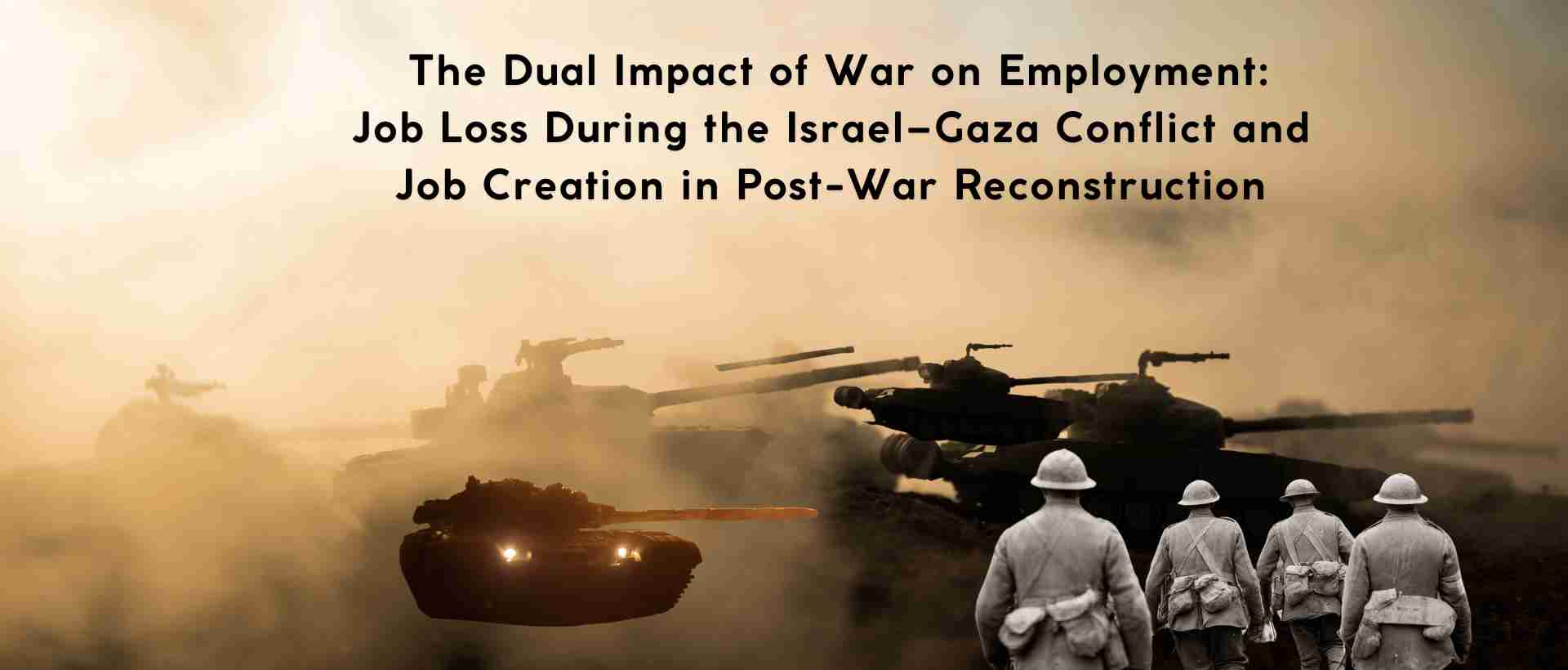
The Dual Impact of War on Employment: Job Loss During the Israel–Gaza Conflict and Job Creation in Post-War Reconstruction
2. Negative Impact of War on Job Vacancies
2.1 Business Closures
Lots of firms and small shops close down during fights.
Harm to shops, plants, and workspaces makes companies close for a short time or forever.
2.2 Job Loss and Unemployment
Workers lose jobs because of less business life.
Lots of fields like travel, shopping, and help see big job losses.
2.3 Labor Shortage Due to Military Mobilization
In war time, many job holders go to the army or defense work.
This cuts down the number of workers for firms and businesses.
2.4 Disruption of Trade and Supply Chains
Fight stops global trade and travel.
Firms hold off on making things and getting new workers due to doubt.
2.5 Impact on Global Business Confidence
People who put money in things get careful about putting cash in shaky areas.
Bussinesses stop growth plans and cut hiring.
3. Global Economic Effects of the Conflict
3.1 Impact on International Markets
Fights can raise world energy costs and travel prices.
Bussinesses all over the world might deal with more costs, which can change who they hire.
3.2 Humanitarian and Social Impact
Many people lose their sources of income.
Money trouble can boost neediness and rely on help.
3.3 Changes in Industry Demand
Some fields might see growth in war, like defense, online safety, and groups that help others.
4. Positive Impact After the War Ends
4.1 Reconstruction and Infrastructure Development
After a fight, leaders and world groups put money into fixing up towns, ways, health places, and learning centers.
These plans make lots of work for builders, designers, and construction folks.
4.2 Growth in Construction and Engineering Jobs
Big rebuilding jobs need smart and basic workers.
Building firms often take on many workers.
4.3 Increase in International Investment
When calm is back, outside money giver͏s might come back to help fix the economy.
New shops and jobs might start, making more work chances.
4.4 Expansion of Technology and Security Sectors
After the war, fixing things often means new buildings and tech tools.
This raises need for tech specialists and security workers.
5. Opportunities for Global Workers
5.1 International Reconstruction Projects
Builders, planners, and aid helpers from various places can join in fix-up tasks.
5.2 Employment in NGOs and Aid Organisations
World groups often need help with fixing things, giving aid, and developing plans.
5.3 Skill Development and Workforce Training
Govts and groups can give job training to help out of work folks get new skills.
6. Role of Government and Economic Policies
6.1 Economic Recovery Programs
Governments start money help plans for firms and workers.
6.2 Investment in Infrastructure
Money from the public for fixing roads and buildings helps make new jobs.
6.3 Support for Small Businesses
Rules that help business people and small firms can aid in getting jobs back.
7. Conclusion
The fight between Israel and the Gaza Strip shows the tricky link between fighting and work. While fighting brings about job cuts, money troubles, and stops to companies, it can also create big work chances during the rebuilding stage.
After war, fixing things needs a big team of workers; this helps the economy get better and creates jobs. With good rules from the government, working together with other countries, and putting in money, this time to recover can change hard economic times into chances for more jobs and lasting growth.
At that time the Israeli job vacancy can increase day by day, and the labour shortage can rise and at event these stage and also in the future.
Contact: BCM group India (Abroad Job Consultancy)
Mobile No: 91 9555446699
Email: enquiry@bcmgroup.in
Submit Your CV: https://bcmgroup.in/looking-for-job/submit-your-cv/
2. Negative Impact of War on Job Vacancies
2.1 Business Closures
Lots of firms and small shops close down during fights.
Harm to shops, plants, and workspaces makes companies close for a short time or forever.
2.2 Job Loss and Unemployment
Workers lose jobs because of less business life.
Lots of fields like travel, shopping, and help see big job losses.
2.3 Labor Shortage Due to Military Mobilization
In war time, many job holders go to the army or defense work.
This cuts down the number of workers for firms and businesses.
2.4 Disruption of Trade and Supply Chains
Fight stops global trade and travel.
Firms hold off on making things and getting new workers due to doubt.
2.5 Impact on Global Business Confidence
People who put money in things get careful about putting cash in shaky areas.
Bussinesses stop growth plans and cut hiring.
3. Global Economic Effects of the Conflict
3.1 Impact on International Markets
Fights can raise world energy costs and travel prices.
Bussinesses all over the world might deal with more costs, which can change who they hire.
3.2 Humanitarian and Social Impact
Many people lose their sources of income.
Money trouble can boost neediness and rely on help.
3.3 Changes in Industry Demand
Some fields might see growth in war, like defense, online safety, and groups that help others.
4. Positive Impact After the War Ends
4.1 Reconstruction and Infrastructure Development
After a fight, leaders and world groups put money into fixing up towns, ways, health places, and learning centers.
These plans make lots of work for builders, designers, and construction folks.
4.2 Growth in Construction and Engineering Jobs
Big rebuilding jobs need smart and basic workers.
Building firms often take on many workers.
4.3 Increase in International Investment
When calm is back, outside money giver͏s might come back to help fix the economy.
New shops and jobs might start, making more work chances.
4.4 Expansion of Technology and Security Sectors
After the war, fixing things often means new buildings and tech tools.
This raises need for tech specialists and security workers.
5. Opportunities for Global Workers
5.1 International Reconstruction Projects
Builders, planners, and aid helpers from various places can join in fix-up tasks.
5.2 Employment in NGOs and Aid Organisations
World groups often need help with fixing things, giving aid, and developing plans.
5.3 Skill Development and Workforce Training
Govts and groups can give job training to help out of work folks get new skills.
6. Role of Government and Economic Policies
6.1 Economic Recovery Programs
Governments start money help plans for firms and workers.
6.2 Investment in Infrastructure
Money from the public for fixing roads and buildings helps make new jobs.
6.3 Support for Small Businesses
Rules that help business people and small firms can aid in getting jobs back.
7. Conclusion
The fight between Israel and the Gaza Strip shows the tricky link between fighting and work. While fighting brings about job cuts, money troubles, and stops to companies, it can also create big work chances during the rebuilding stage.
After war, fixing things needs a big team of workers; this helps the economy get better and creates jobs. With good rules from the government, working together with other countries, and putting in money, this time to recover can change hard economic times into chances for more jobs and lasting growth.
At that time the Israeli job vacancy can increase day by day, and the labour shortage can rise and at event these stage and also in the future.
Contact: BCM group India (Abroad Job Consultancy)
Mobile No: 91 9555446699
Email: enquiry@bcmgroup.in
Submit Your CV: https://bcmgroup.in/looking-for-job/submit-your-cv/
The Dual Impact of War on Employment: Job Loss During the Israel–Gaza Conflict and Job Creation in Post-War Reconstruction 2. Negative Impact of War on Job Vacancies 2.1 Business Closures Lots of firms and small shops close down during fights. Harm to shops, plants, and workspaces makes companies close for a short time or forever. 2.2 Job Loss and Unemployment Workers lose jobs because of less business life. Lots of fields like travel, shopping, and help see big job losses. 2.3 Labor Shortage Due to Military Mobilization In war time, many job holders go to the army or defense work. This cuts down the number of workers for firms and businesses. 2.4 Disruption of Trade and Supply Chains Fight stops global trade and travel. Firms hold off on making things and getting new workers due to doubt. 2.5 Impact on Global Business Confidence People who put money in things get careful about putting cash in shaky areas. Bussinesses stop growth plans and cut hiring. 3. Global Economic Effects of the Conflict 3.1 Impact on International Markets Fights can raise world energy costs and travel prices. Bussinesses all over the world might deal with more costs, which can change who they hire. 3.2 Humanitarian and Social Impact Many people lose their sources of income. Money trouble can boost neediness and rely on help. 3.3 Changes in Industry Demand Some fields might see growth in war, like defense, online safety, and groups that help others. 4. Positive Impact After the War Ends 4.1 Reconstruction and Infrastructure Development After a fight, leaders and world groups put money into fixing up towns, ways, health places, and learning centers. These plans make lots of work for builders, designers, and construction folks. 4.2 Growth in Construction and Engineering Jobs Big rebuilding jobs need smart and basic workers. Building firms often take on many workers. 4.3 Increase in International Investment When calm is back, outside money giver͏s might come back to help fix the economy. New shops and jobs might start, making more work chances. 4.4 Expansion of Technology and Security Sectors After the war, fixing things often means new buildings and tech tools. This raises need for tech specialists and security workers. 5. Opportunities for Global Workers 5.1 International Reconstruction Projects Builders, planners, and aid helpers from various places can join in fix-up tasks. 5.2 Employment in NGOs and Aid Organisations World groups often need help with fixing things, giving aid, and developing plans. 5.3 Skill Development and Workforce Training Govts and groups can give job training to help out of work folks get new skills. 6. Role of Government and Economic Policies 6.1 Economic Recovery Programs Governments start money help plans for firms and workers. 6.2 Investment in Infrastructure Money from the public for fixing roads and buildings helps make new jobs. 6.3 Support for Small Businesses Rules that help business people and small firms can aid in getting jobs back. 7. Conclusion The fight between Israel and the Gaza Strip shows the tricky link between fighting and work. While fighting brings about job cuts, money troubles, and stops to companies, it can also create big work chances during the rebuilding stage. After war, fixing things needs a big team of workers; this helps the economy get better and creates jobs. With good rules from the government, working together with other countries, and putting in money, this time to recover can change hard economic times into chances for more jobs and lasting growth. At that time the Israeli job vacancy can increase day by day, and the labour shortage can rise and at event these stage and also in the future. Contact: BCM group India (Abroad Job Consultancy) Mobile No: 91 9555446699 Email: enquiry@bcmgroup.in Submit Your CV: https://bcmgroup.in/looking-for-job/submit-your-cv/
0 Yorumlar
0 hisse senetleri
1 Views
0 önizleme

 English
 Arabic
 French
 Spanish
 Portuguese
 Deutsch
 Dutch
Dutch
 Italiano
 Russian
 Romaian
 Portuguese (Brazil)
 Greek
Greek