


Automation has become a strategic priority for insurers aiming to improve efficiency, accuracy, and scalability. The integration of AI in Insurance supported by machine learning technologies is transforming traditional workflows that once depended heavily on manual intervention. From underwriting and claims processing to customer servicing and compliance checks, automation is enabling insurers to operate faster and more intelligently.
Identify investment opportunities emerging from rapid advancements in the AI in Insurance Market worldwide at: https://market.us/report/ai-in-insurance-market/.
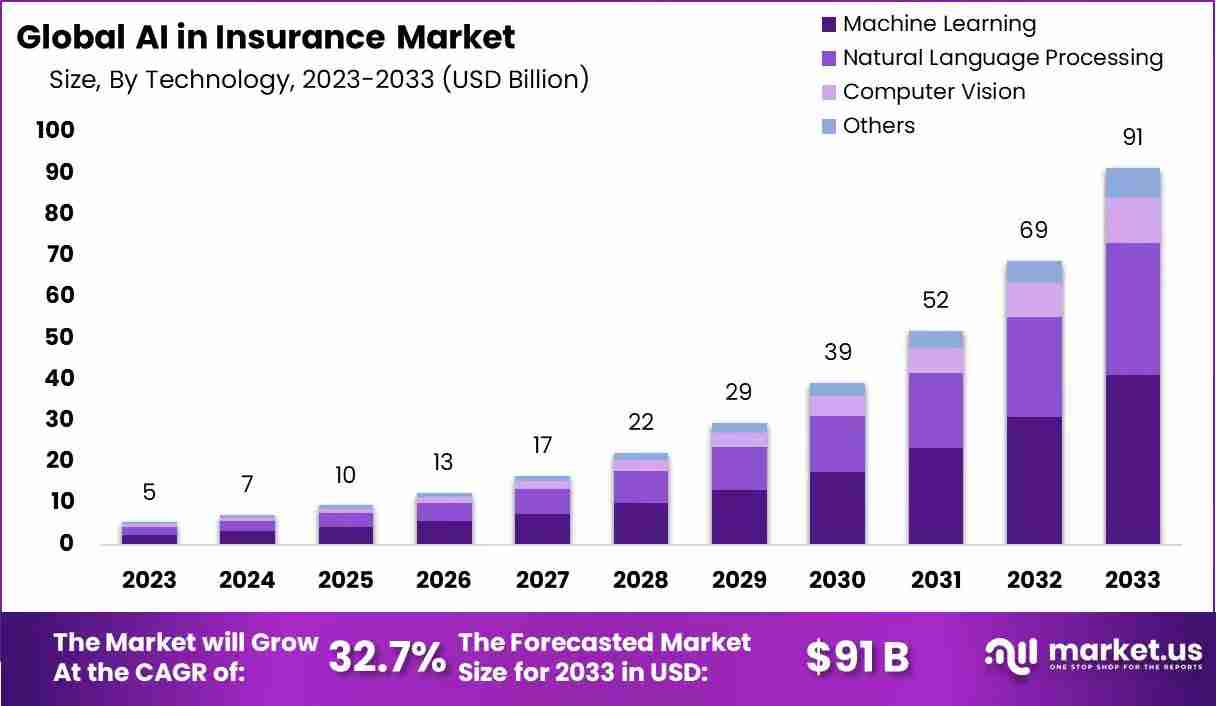
This widespread deployment of intelligent automation is a key growth engine within the AI in Insurance Market, as organizations seek to modernize legacy systems and reduce operational overhead.
Machine learning, a subset of AI, allows systems to learn from historical data and improve decision-making over time. In insurance, machine learning models analyze claims data, customer profiles, and risk factors to automate complex evaluations that previously required human expertise.
The ability of machine learning to continuously refine its predictions is expanding the practical applications of AI in Insurance across departments.
Underwriting involves extensive data analysis and risk evaluation. AI-powered systems automate document verification, data extraction, and risk scoring, significantly reducing processing time. Policies that once took days to approve can now be issued within minutes.
This efficiency is accelerating adoption across the AI in Insurance Market as insurers strive for faster service delivery.
Claims management is one of the most resource-intensive processes in insurance. Machine learning algorithms analyze images, documents, and historical data to validate claims automatically. This reduces delays and ensures consistent assessments.
Automated claims handling is one of the strongest contributors to growth in the AI in Insurance Market.
Identify investment opportunities emerging from rapid advancements in the AI in Insurance Market worldwide at: https://market.us/report/ai-in-insurance-market/.
This widespread deployment of intelligent automation is a key growth engine within the AI in Insurance Market, as organizations seek to modernize legacy systems and reduce operational overhead.
Machine learning, a subset of AI, allows systems to learn from historical data and improve decision-making over time. In insurance, machine learning models analyze claims data, customer profiles, and risk factors to automate complex evaluations that previously required human expertise.
The ability of machine learning to continuously refine its predictions is expanding the practical applications of AI in Insurance across departments.
Underwriting involves extensive data analysis and risk evaluation. AI-powered systems automate document verification, data extraction, and risk scoring, significantly reducing processing time. Policies that once took days to approve can now be issued within minutes.
This efficiency is accelerating adoption across the AI in Insurance Market as insurers strive for faster service delivery.
Claims management is one of the most resource-intensive processes in insurance. Machine learning algorithms analyze images, documents, and historical data to validate claims automatically. This reduces delays and ensures consistent assessments.
Automated claims handling is one of the strongest contributors to growth in the AI in Insurance Market.
Automation has become a strategic priority for insurers aiming to improve efficiency, accuracy, and scalability. The integration of AI in Insurance supported by machine learning technologies is transforming traditional workflows that once depended heavily on manual intervention. From underwriting and claims processing to customer servicing and compliance checks, automation is enabling insurers to operate faster and more intelligently. Identify investment opportunities emerging from rapid advancements in the AI in Insurance Market worldwide at: https://market.us/report/ai-in-insurance-market/. This widespread deployment of intelligent automation is a key growth engine within the AI in Insurance Market, as organizations seek to modernize legacy systems and reduce operational overhead. Machine learning, a subset of AI, allows systems to learn from historical data and improve decision-making over time. In insurance, machine learning models analyze claims data, customer profiles, and risk factors to automate complex evaluations that previously required human expertise. The ability of machine learning to continuously refine its predictions is expanding the practical applications of AI in Insurance across departments. Underwriting involves extensive data analysis and risk evaluation. AI-powered systems automate document verification, data extraction, and risk scoring, significantly reducing processing time. Policies that once took days to approve can now be issued within minutes. This efficiency is accelerating adoption across the AI in Insurance Market as insurers strive for faster service delivery. Claims management is one of the most resource-intensive processes in insurance. Machine learning algorithms analyze images, documents, and historical data to validate claims automatically. This reduces delays and ensures consistent assessments. Automated claims handling is one of the strongest contributors to growth in the AI in Insurance Market.
0 Commenti
0 condivisioni
1 Views
0 Anteprima

 English
 Arabic
 French
 Spanish
 Portuguese
 Deutsch
 Turkish
 Dutch
Dutch
 Russian
 Romaian
 Portuguese (Brazil)
 Greek
Greek